
English| EUR
Suggested for you
More currencies
Choose a language
Tracking leopards through Amagarh Reserve requires understanding the fee structure that funds conservation efforts in one of India's few urban wildlife corridors. The pricing model separates entrance fees from safari vehicle charges, with different rates for domestic and international visitors. This guide breaks down what you'll pay and what those fees support.
Quick answer
Foreign adult visitors pay a conservation fee of ₹2,500 at Amagarh Leopard Reserve, which grants access to the protected forest area near Galtaji Temple. This entrance charge is separate from safari vehicle fees, which vary based on vehicle type and group size. The conservation levy directly supports habitat maintenance, anti-poaching patrols, and the leopard monitoring program that makes Jhalana one of the highest-density leopard habitats documented in Asia.
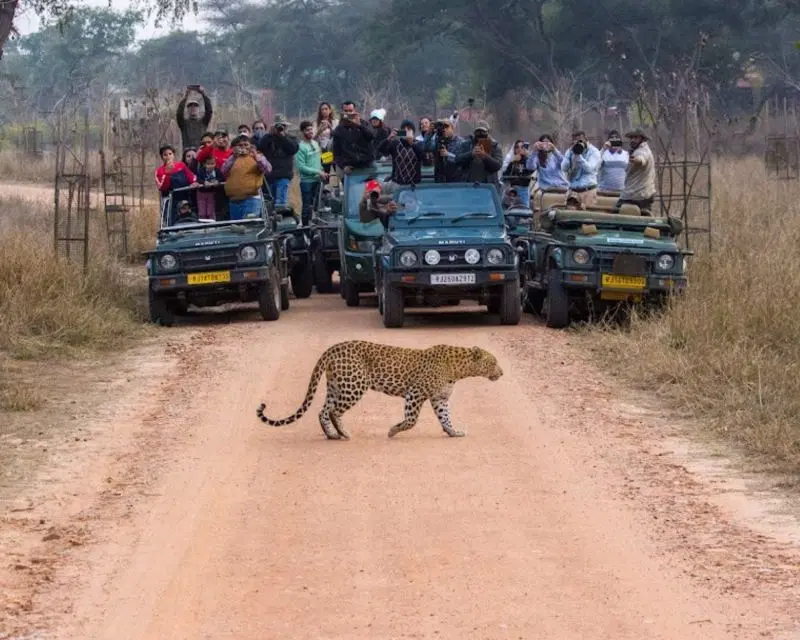
Jhalana Leopard Safari Park sustains one of the densest urban leopard populations ever recorded, with more than 40 individuals tracked across just 23 square kilometers of dry deciduous scrubland. The amagarh leopard safari ticket price reflects the intensive management required to maintain this delicate balance between wildlife and the surrounding Jaipur neighborhoods, funding everything from prey population monitoring to community education programs that reduce human-wildlife conflict. The conservation fee structure separates baseline park access from the safari experience itself. International visitors encounter the ₹2,500 entrance levy, while safari vehicle costs depend on whether you book a shared jeep or private transport. The Rajasthan Forest Department operates the reserve under strict carrying-capacity limits, capping daily visitor numbers to minimize disturbance to leopard territories during critical dawn and dusk activity periods when the cats hunt chital deer and Indian gazelle across the thornbush landscape. Pricing transparency matters because safari costs in Jhalana differ fundamentally from tiger reserves like Ranthambore. The amagarh leopard safari ticket price guide includes no zone lottery system or multiple-entry permits—every ticket grants one safari session during the shift you book, with leopard sighting success rates above 60 percent during optimal morning and evening windows. Revenue flows directly into forest guard salaries, GPS collar maintenance for behavioral research, and waterhole construction that keeps prey species concentrated in viewable areas. The fee model also accounts for seasonal demand fluctuations. October through March sees higher visitor volumes as winter temperatures make the scrubland more accessible, but the reserve maintains consistent pricing year-round rather than implementing peak-season surcharges. This approach prioritizes conservation funding stability over revenue maximization, ensuring that anti-poaching patrols and veterinary interventions continue through the monsoon months when tourist traffic drops but wildlife management needs remain constant.
“Revenue flows directly into forest guard salaries, GPS collar maintenance for behavioral research, and waterhole construction that keeps prey species concentrated in viewable areas.”
Amagarh Leopard Reserve operates on a consistent schedule throughout the week to accommodate safari shifts. Visitors may access the park daily within the established hours.
Maximizing wildlife sightings at Amagarh Leopard Reserve depends on aligning your visit with the animals' natural activity cycles during the cooler transitions of the day. The best arrival window is 05:45–18:45, targeting the early morning or late evening safari shifts when predators are most active.
Cool, 10°C to 25°C
These months offer the most comfortable temperatures for extended observation. Leopards are frequently spotted basking during cooler daylight hours.
Hot, 35°C to 45°C
High heat levels make waterholes the primary focal points for wildlife. Early morning arrivals are essential before temperatures peak.
Humid, 25°C to 35°C
The landscape is dense and green following monsoon rains. Visibility can be lower, but the park experiences fewer visitor numbers.
Verdict: The optimal experience occurs from October to March, arriving at the park gates by 05:45 to capitalize on peak leopard movement.
Amagarh Leopard Reserve is situated near the Galtaji Temple along Agra Road in Jaipur, Rajasthan. The most efficient way to reach the reserve is via private taxi or personal vehicle due to the direct road access.
Follow Agra Road (NH 21) toward Galtaji Temple
Hire a local taxi or ride-hailing service to Amagarh Leopard Reserve
Local Rajasthan State Road Transport Corporation (RSRTC) bus to Galtaji/Agra Road stop
Visitors should approach via the main Agra Road entrance near the Galtaji Temple complex. Ensure your driver is aware of the specific reserve entry point to avoid navigation delays.
Ensure a smooth entry into the Amagarh Leopard Reserve by completing these essential preparations prior to your safari.
Everything you need to know about amagarh leopard safari ticket price
The current entrance fee is 2,500 INR as a conservation fee for each foreign adult visitor. For specific pricing regarding other categories, please refer to the official government portal at https://forest.rajasthan.gov.in.
While the conservation fee for foreign visitors is standardized, it is important to check the official portal for the most accurate amagarh leopard safari ticket price as it relates to domestic entry or special permits. Rates are subject to regulatory changes established by the forest department.
You can secure your spot for a Jaipur wildlife tour by visiting the official forest department website. This centralized platform handles all bookings for the leopard sanctuary, ensuring you have a confirmed reservation before you arrive.
The reserve maintains consistent operational hours throughout the week, opening daily from 05:45 to 19:15. This schedule applies to all seven days, including weekends and public holidays, to accommodate visitors seeking to explore the natural habitat.
The best arrival window for your leopard tracking experience is between 05:45 and 18:45. This timeframe is optimized for morning and evening safari shifts, providing the highest probability of observing wildlife in their natural environment.
Children are generally permitted, though all visitors must adhere to the standard entry regulations set by the forest authority. We recommend reviewing the latest visitor guidelines on the official website to ensure a smooth check-in process for families.
The amagarh leopard safari ticket price remains consistent regardless of the day of the week you choose to visit. Whether you are planning a weekend trip or a weekday excursion, the fee structure for this Rajasthan wildlife attraction follows a set policy.